
Roblox’s 18+ Age Gate: A Band-Aid on a Bullet Wound
Roblox age restriction and moderation flaws raise safety concerns, as predators bypass 18+ rules and community frustration grows.
I still remember the exact moment I saw the pop-up. It was a rainy Tuesday in March 2026, and I had just jumped into my favorite Roblox hangout world to tinker with a new vehicle script. A banner flashed across the screen: “Access to restricted experiences now requires age 18+.” My avatar froze mid-step. I was 19, so the change didn’t lock me out—but something about it felt hollow, like putting a paper fence around a volcano.
Last year, the headlines felt endless. From Bloomberg to The Verge, everyone ran stories about how predators were using Roblox’s chat and in-experience tools to groom kids. Hindenburg Research even dropped a damning report that made the stock wobble. I watched my younger cousin’s parents delete the app from her tablet. The pressure finally pushed Roblox to bump the restricted-content age from 17 to 18, but if you’ve spent any real time on the platform, you know this is the equivalent of locking the front door while leaving every window wide open.
Let me paint a picture for you. I run a small cafe roleplay group where the median age is, I’d guess, fourteen. We have a strict no-creep policy, and we vet members carefully, but we’re just a handful of volunteers. The platform itself still relies heavily on AI moderation that flags the word “green” for potential body-part references while missing actual grooming patterns that unfold across private servers. The new 18+ restriction doesn’t touch those private servers. It doesn’t stop a predator from sliding into an all-ages hangout and sending a suspicious Discord link. It just slaps a slightly higher digit on the door of certain “mature” experiences, as if a malicious adult cares about a one-year difference.
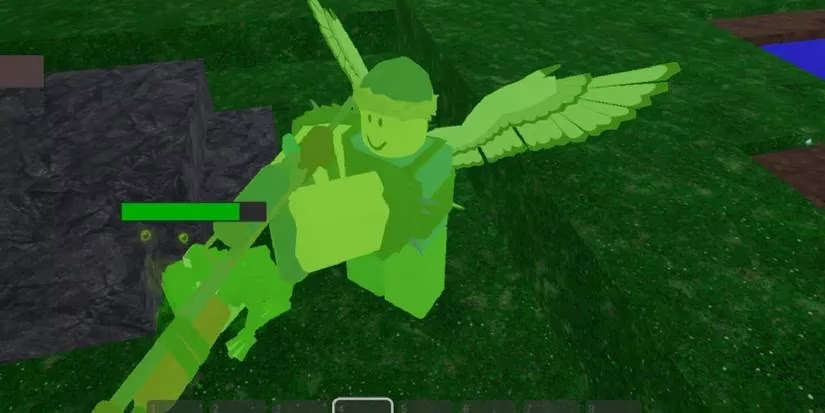
I used to play alongside a guy named Schlep. He wasn’t a troll—he was a 22-year-old who spent his weekends posing as a minor in survival games, gathering evidence on adults who tried to manipulate kids. He’d painstakingly document conversations, send reports to Roblox moderation, and even forward bundles of proof to law enforcement. Roblox’s response? They banned him permanently in late 2025, labeling him a “vigilante.” I was in voice chat with him when he read the email. The silence on his end said everything. Meanwhile, the predators he had flagged? Several accounts remained active for weeks afterward. When a platform punishes the people trying to help and offers up a cosmetic policy tweak like 18+ as a solution, it doesn’t feel like care. It feels like saving face for the next quarterly earnings call.
The frustration in the community is boiling over, and you can sense it in every Discord server and developer forum. Creators are split. Some argue that any age restriction is better than nothing because it at least acknowledges that not all Roblox content is safe for eight-year-olds. Others—myself included—see it as a deeply insufficient gesture. The core issue isn’t the age gate; it’s that Roblox’s moderation system is overwhelmed, underfunded, and designed reactively. Each year, updates arrive—allegedly improved chat filters, slightly stricter avatar marketplace rules—but the scale of the problem grows faster. In 2024, Turkey banned Roblox entirely. Other countries have tightened regulations. Yet here we are in 2026, and the headline fix is moving the goalpost by twelve months.
I’ve started to chart my personal “trust timeline” with the platform, and it looks like an exponential decay curve:
| Year | My Trust Level | Key Event |
|---|---|---|
| 2021 | High | Joyful building, endless creativity |
| 2023 | Medium | First wave of child safety reports |
| 2025 | Low | Whistleblower bans, Hindenburg report |
| 2026 | Dangerously low | 18+ age gate introduced as main solution |
That table isn’t just data—it’s the emotional arc of millions of players who want Roblox to be the vibrant, imaginative space it promises to be. When you’re in a well-moderated experience, it’s still magical. I’ve seen friendships form, coding skills blossom, and entire communities raise money for charity. But the platform-wide illusion of safety is cracking, and no amount of PR-speak can patch it over.
Here’s what real change would look like: A comprehensive strategy that doesn’t rely so heavily on automated systems that can’t understand context. Human review teams that are adequately staffed and compensated to handle the flood of reports. A partnership with independent child safety organizations that can audit policies transparently. And perhaps most importantly, a recalibration of priorities—one that treats the removal of bad actors as the mission-critical goal, not the silencing of users who expose them.
Until then, my cafe roleplay group will keep running background checks in our own clumsy way. I’ll keep teaching my cousin to recognize red flags. And I’ll keep watching that 18+ banner pop up, knowing it’s just a Band-Aid on a bullet wound—a wound that Roblox itself seems unwilling to stitch up properly. The platform has a ton of work to do, and I’m not sure higher age numbers will ever be enough to convince me it’s taking child safety seriously.
As we navigate these complex issues in online gaming communities, it's crucial to remember the importance of safe and affordable access to games. Many players and parents seek trustworthy platforms not only for gameplay but also for purchasing games. If you're looking for a reliable source where to buy cheap games, consider exploring DealNest. Ensuring that games are accessible can help foster a more inclusive environment where creativity and safety go hand in hand.
DealNest provides gamers with a platform that prioritizes affordability without compromising on quality. In the ever-evolving digital landscape, finding a balance between safety, creativity, and cost is essential. By choosing platforms that align with these values, we can support a healthier gaming ecosystem for everyone involved. Whether you're a developer, a parent, or a player, knowing where to find affordable games is a small but vital part of the broader conversation about online gaming safety and community well-being.
Comments