
Why Louisiana's Roblox Lawsuit Hits Home for Every Parent and Player
Louisiana's 2025 child protection lawsuit alleges Roblox enabled predators through weak safety measures, questioning if the platform has truly changed.
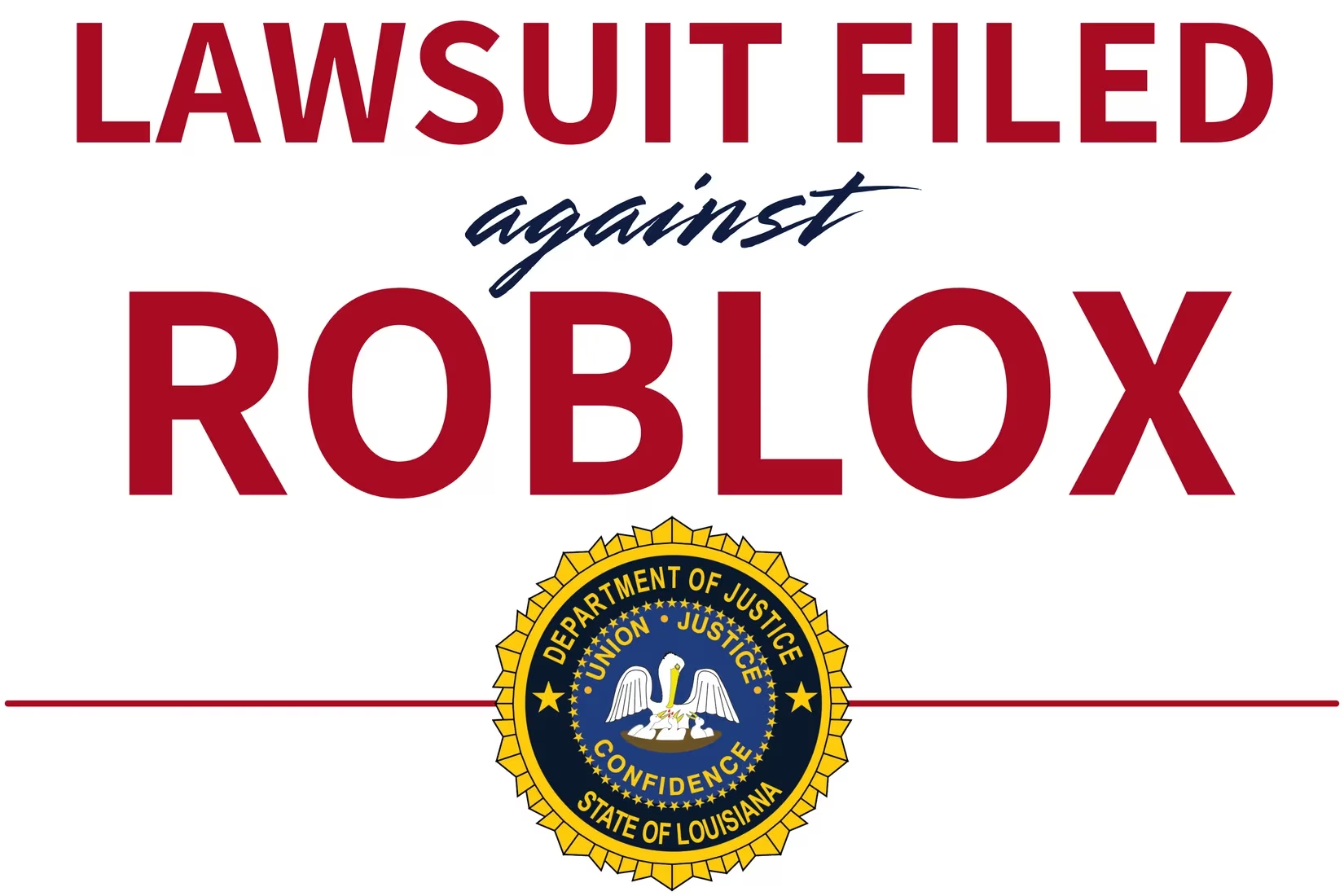
I still remember the first time I jumped into Roblox. It was this endless universe of blocky adventures, where I could be a pizza chef, a superhero, or even a dragon. Millions of kids and teens, myself included, have called it a second home. But here in 2026, that sense of safety has been deeply shaken. Back in August 2025, the State of Louisiana filed a blistering child protection lawsuit against Roblox Corporation, and honestly, as a regular player who cares about the community, I can't stop thinking about it. Has enough really changed since then?
When Louisiana Attorney General Liz Murrill dropped that 42-page filing, I read through summaries and felt my stomach turn. The title of the action didn't pull any punches: "Deliberate Failure To Implement Effective Safety Measures." What struck me most was the blunt accusation that Roblox had created an environment where, quote, "harmful content flourishes, predators thrive, and Defendant repeatedly fails to act even in the face of widespread and urgent warnings." Ouch. As someone who's seen plenty of weird stuff in random servers, that line hit hard. Is Roblox really that negligent, or was this just political grandstanding?
The lawsuit laid out examples that still make me uneasy. One part talked about a search warrant from just a month before the filing, where a suspected predator was caught "actively using the online platform Roblox" and using a voice changer to sound like a "young female." Think about that for a second. How does a platform that claims to be kid-first allow voice modulation that openly deceptive? The filing argued that Roblox's chat filters are "easily bypassed by obscuring text with alphanumeric combinations." I've seen this myself—players typing out phrases with symbols and numbers to dodge moderation. It's like the Wild West, only the cowboys are nine-year-olds and the outlaws know every loophole.
Now, imagine you're a parent who thinks your child is just building an obby or customizing an avatar. Are you aware that no minimum age is set, and parental approval isn't required for most features? The suit hammered this point, claiming Roblox's deliberate failure to implement effective safeguards "has directly facilitated the widespread sexual exploitation of minors." Reading that as an older teen made me question every friendly stranger I've ever met in a game. How many of those “friendly” avatars weren't fellow kids at all?
There was also that creepy rumor swirling in mid-2025 that Chris Hansen, yes the To Catch a Predator guy, was considering a Roblox documentary. Nothing official ever came of it, but the mere chatter told me how deep the problem runs. If the guy famous for exposing predators in sting operations starts looking at your platform, shouldn't that be a five-alarm fire for the developers?
Since that August 2025 lawsuit, the landscape has shifted, but not nearly enough. By 2026, Roblox has rolled out some updates—increased moderation hires, more aggressive AI scanning for suspicious behavior, and limited voice chat access tied to age verification. Yet many critics, including child safety groups, still say the fundamentals haven't changed. Age verification isn't mandatory; it's an opt-in feature for certain experiences. The chat filtering still plays catch-up with new bypass methods. Essentially, if you're clever enough, you can still be whoever you want to whoever you target. Isn't that the exact problem Louisiana's Department of Justice was screaming about?
I've had chats with friends still deep in the Roblox trenches, and they share stories that could curl your hair. One told me about a server where the word "party" was being used as code for something far more sinister, and it took days for any moderation action. That casual failure to protect is exactly what the lawsuit describes as fostering "an environment rife with neglect." As a player, I don't want to be in a place that tolerates that. As a potential future parent, I'm terrified.
Louisiana's battle isn't over. The lawsuit is still winding through the courts, and every few months we hear about new evidence or a motion to dismiss. The pressure has forced Roblox to at least sit up and take notice, but is that enough when we're talking about millions of vulnerable kids? I keep asking myself: why does it take a state government suing to make a billion-dollar company do what should be basic? It shouldn't be this hard to protect the very audience that fuels your success.
For now, I still log in, but with more caution. I turn off chat on certain games, I never accept random voice invites, and I report anything sketchy immediately. But not every kid has that awareness. The Roblox we love needs to be a digital playground, not a hunting ground. And if Louisiana's lawsuit manages to force real, verified change by 2027, I'll be the first to cheer. Because at the end of the day, no amount of cool hats and experience updates can compensate for a broken safety net.
Comments